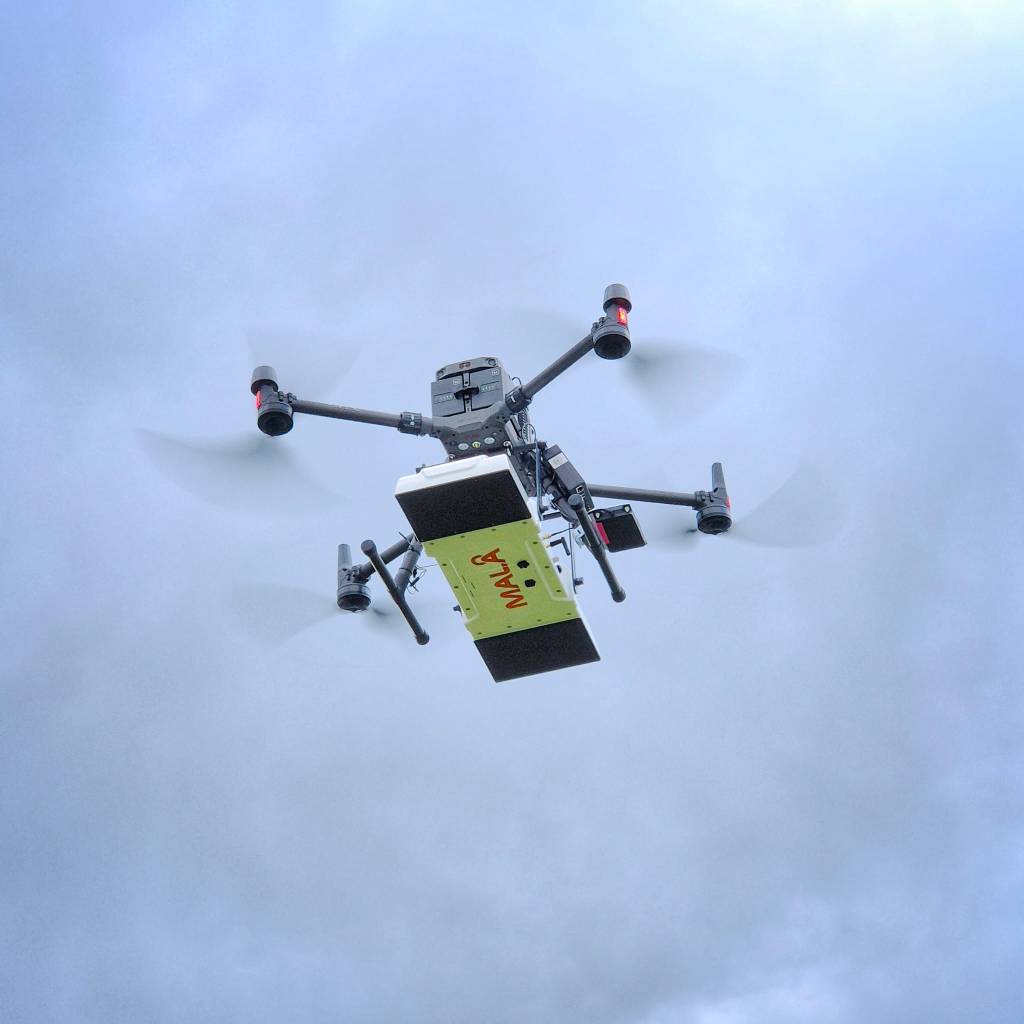
For the first news post on the Facility website, I am delighted to announce that we have been selected to collaborate with AOC Archaeology and the Trimontium Trust to run an Access Fund Catalyst Project this spring, bringing cutting-edge geophysical instruments to the northern fringes of the Roman Empire to study how the Romans controlled a key crossing point on the River Tweed and interacted with the local population.
In 2022, the Trimontium Trust and AOC Archaeology used ground-penetrating radar (GPR) for the first time at the fort, training volunteers and restarting active field research on the site after a hiatus.
That survey employed a high-resolution Mala MIRA system, the first of its kind on a Roman fort in Scotland, but the equipment is no longer available in the UK, leaving parts of the site unsurveyed. To continue, the University of Bradford’s compact Mala MIRA unit and further new RICHeS-funded tools, including drone-based GPR, will be used to complete surveys of the fort and search for the Roman crossing point along the River Tweed.
The work, carried out in partnership with the Uncovering the Tweed project, facilitated AOC Archaeology brings together technical specialists, archaeologists and volunteers, placing public participation at the heart of frontier research while ensuring new data is widely shared.
The Access Fund is now open to researchers, community groups, small museums and other organisations to apply for access to RICHeS funded facilities at 31 institutions, supporting access to Heritage Science across the UK and internationally. To find out more, including how to apply visit the RICHeS website!
If you want to get in touch to discuss a possible collaboration, whether through the access fund or via another route, use the contact information below to drop us a line. We’re particularly interested in questions about landscapes that bridge the zones between water and dry land. KA
 From Land to Sea
Leave a comment